India’s Markets Brace for Big Moves: Key Announcements Awaited
On one side, Reserve Bank of India (RBI) is wrapping up its three-day meeting of the Monetary Policy Committee (MPC), and at 10:00 AM the country will learn whether the central bank will tweak its benchmark lending rate (the “repo rate”).
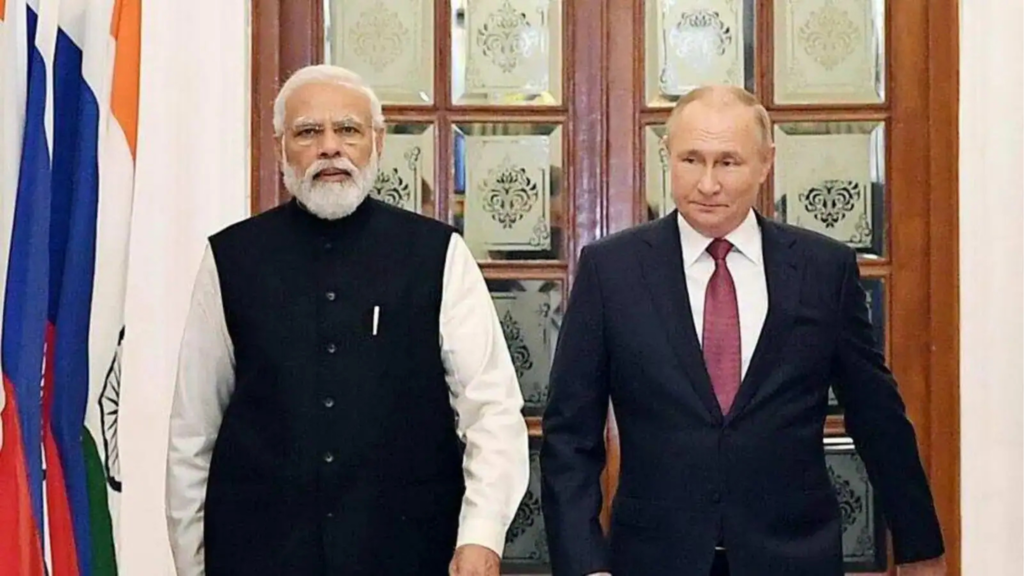
On the other side, the world is watching closely as Vladimir Putin meets Narendra Modi in New Delhi a summit with implications for trade, defence, and geopolitics, all of which can ripple through markets.
Added to that are global signals data releases from the U.S., currency-market movements, oil-price fluctuations. It’s a data-heavy, news-heavy day, and that overhead tension is already being felt.
The RBI’s decision: More than just a number
At its core, the repo rate is the cost at which commercial banks borrow from the RBI which eventually influences loan rates, deposit rates, and overall liquidity in the system. Lower rates tend to make credit cheaper, encouraging borrowing and investment.
If the MPC opts for a rate cut, it could be a tailwind for borrowers home loans, auto loans, business credit and might trigger renewed momentum in consumption-oriented sectors. On the flip side, a decision to hold rates could disappoint markets hoping for a boost.
Given the economic context cooling inflation, steady growth many analysts have been watching for a potential 25 basis-point cut.
But beyond just short-term relief, this move (or lack of it) sends a signal about the broader stance of the RBI whether it’s looking to spur growth, or being cautious about inflation and financial stability.
The geopolitical wildcard: Modi-Putin meet and global vibrations
The meeting between Modi and Putin is expected to involve discussions around trade ties, defence cooperation, energy (especially oil) imports, and perhaps even labour or economic cooperation. For a country like India, where energy costs, import bills and global trade sentiment matter a lot, such diplomatic developments can shape investor confidence.
On a macro level, any signals of strengthening India–Russia cooperation (or surprise developments) might sway sectors tied to energy, defence, infrastructure and shape broader sentiment about India’s global economic positioning.
Meanwhile, global factors like U.S. economic data, interest-rate expectations abroad, and crude-oil prices add to the uncertainty. Investors are juggling all these threads and that makes today particularly volatile.
What this means for different types of investors
For short-term, market-savvy investors:
- A surprise rate cut or dovish signals from RBI could trigger a rally, especially in interest-rate sensitive stocks (banks, real estate, consumer credit).
- Conversely, if the RBI holds rates steady or gives a cautious tone, volatility could rise and some profit-booking might happen.
For medium to long-term investors:
- A rate cut could mean cheaper credit and stronger economic activity, which may benefit sectors like infrastructure, real estate, consumption, and manufacturing.
- International developments (global inflation, oil prices, trade relations) could shift the macro environment so watching global cues remains important.
For first-time or risk-averse investors:
- Days like this underscore why diversification matters. With many moving parts domestic policy, global events, currency swings having a balanced portfolio (equities + safer assets) helps manage risk.
The big takeaway: Be alert and patient
December 5 feels like a litmus test. Between monetary policy, global geopolitics and market mood, many factors are coming together at once. For investors, that means: expect volatility, but also opportunity.
Instead of chasing short-term moves, this might be a good time to reassess portfolios, stay informed, and avoid reacting impulsively. And for those with a longer-term horizon: the next few months could offer meaningful entry points if things settle in a favorable way.
About The Author